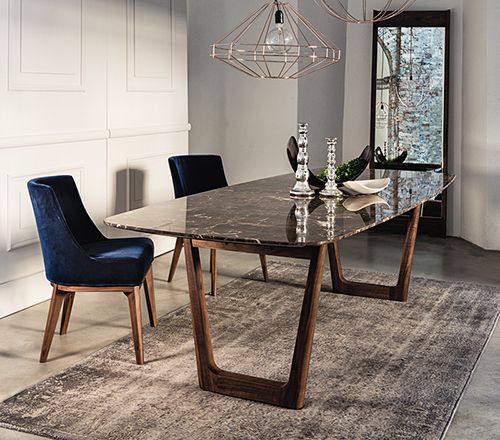
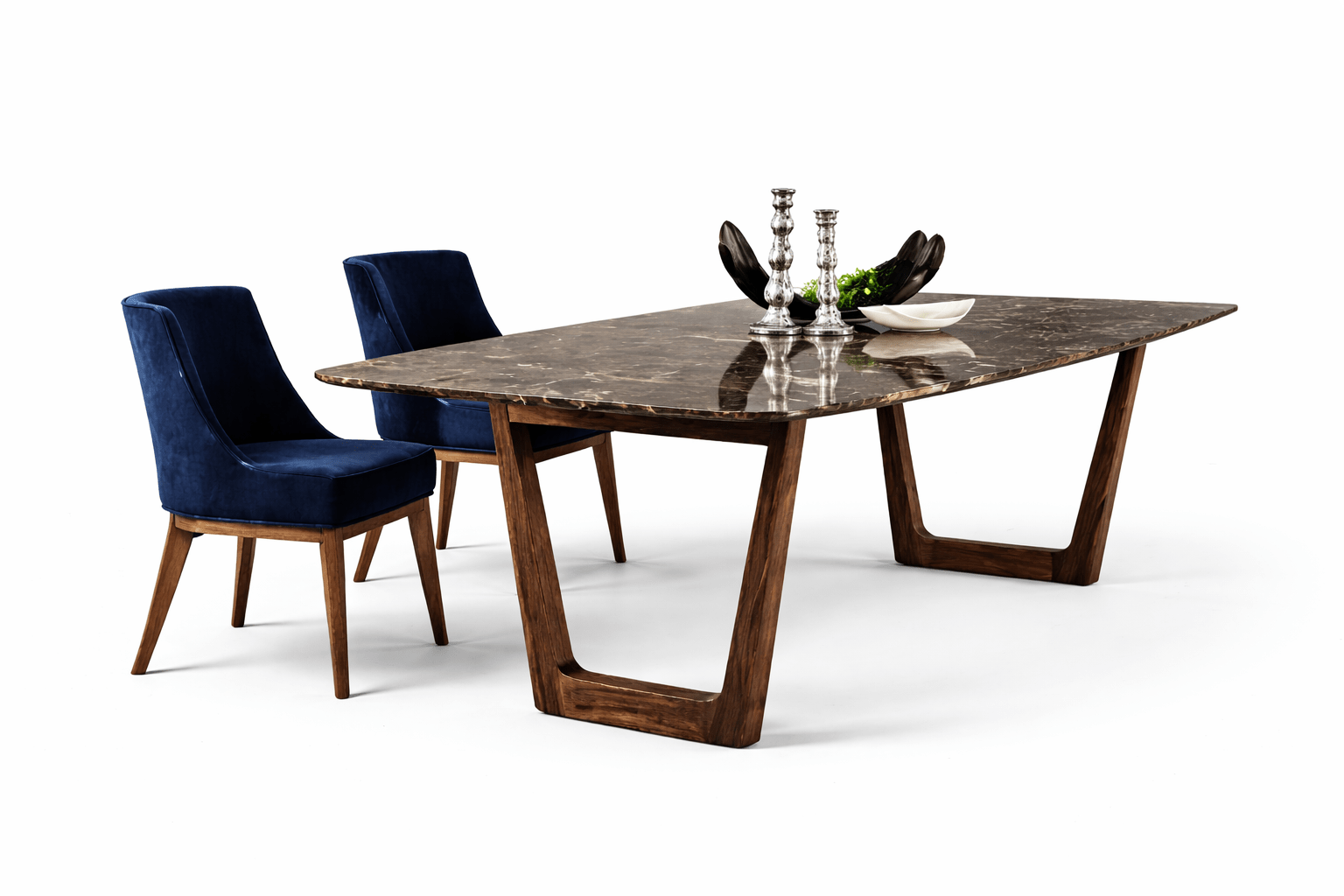
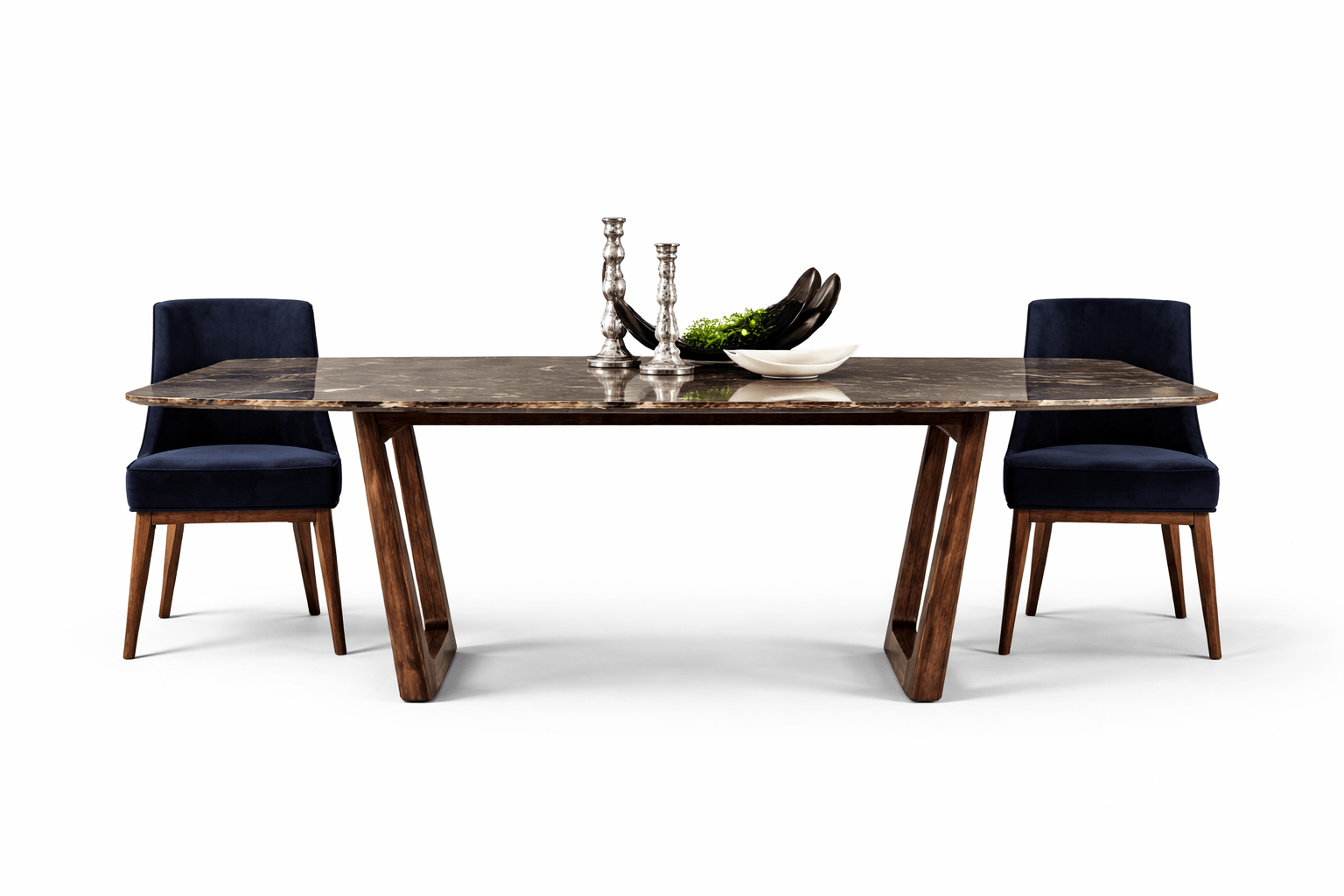
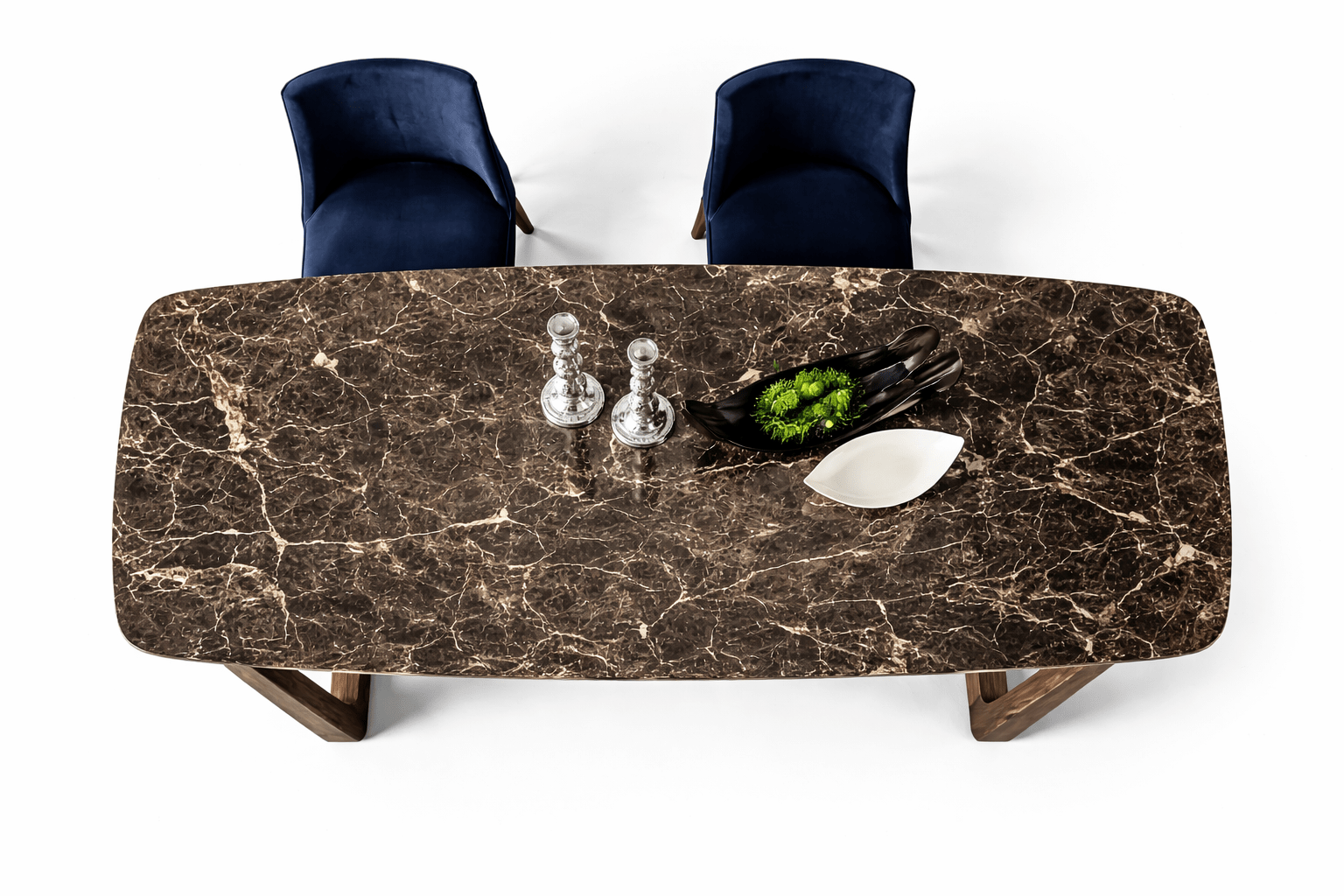
Premium Wooden Marble Dining Table for Dining Room Planned Around Placement
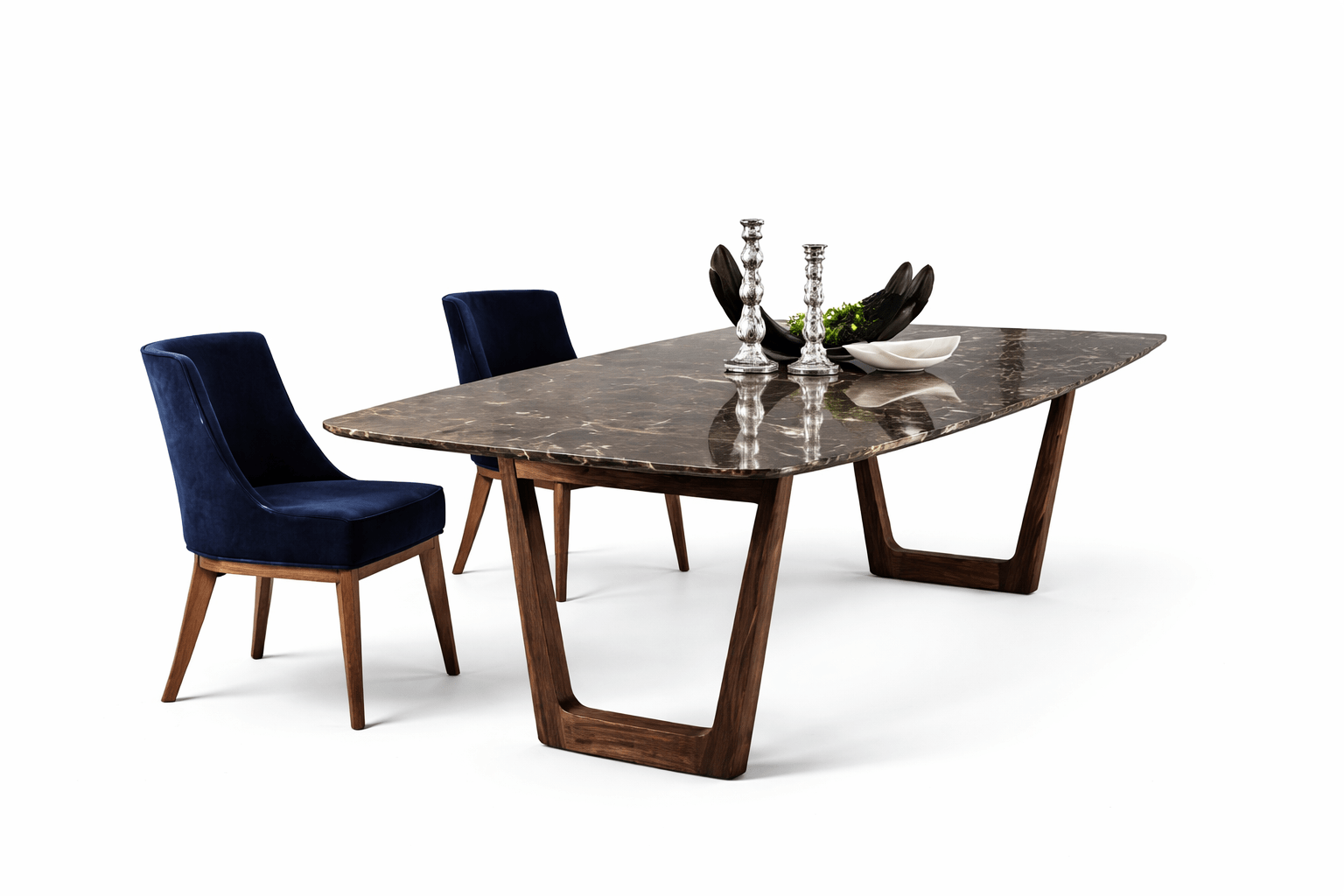
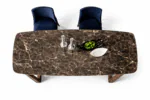
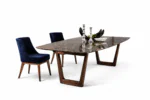
The Horizontal Eight Premium Wooden Marble Dining Table for the Dining Room is available in two confirmed sizes: 48″ L × 36″ W × 30″ H and 72″ L × 36″ W × 30″ H.
The product name identifies wood and marble as its material direction, but choosing between these two formats should begin with something more practical: how the rectangular table will sit within the room.
A dining table can technically fit into a floor plan and still feel awkward if its length works against the room, interrupts movement, or leaves furniture compressed around one side. Looking at orientation before styling helps avoid that problem.
Start With the Direction of the Room
Rectangular dining tables naturally create a strong directional line.
The 48-inch version creates a four-foot line.
The 72-inch version extends that line to six feet.
Before selecting the size, look at the dining area’s existing geometry.
Where is the longest wall?
Where is the main opening?
From which direction do people normally enter the dining area?
Where does movement continue towards the kitchen, living room, balcony, or hallway?
The table does not always need to follow the longest dimension of the room, but its orientation should move around it feel deliberate rather than accidental.
48-Inch Length for Tighter Floor Plans
The smaller 48″ L × 36″ W × 30″ H format keeps the rectangular footprint more contained.
This can be useful where the dining area sits between several fixed elements—perhaps a wall on one side and an opening or circulation route on another.
A shorter table leaves more flexibility at both ends.
That extra open area can matter more than the tabletop length itself when people regularly move past the dining setting.
The 48-inch version can therefore make sense when the objective is to preserve a clearer route through the room while still establishing a rectangular dining surface.
72-Inch Length Needs More Than an Empty Six-Foot Space
The 72″ L × 36″ W × 30″ H format requires thinking beyond the table’s physical dimensions.
A six-foot table occupies six feet when nobody is using it, but the complete dining setting extends farther once chairs and movement are considered.
That does not mean a large room automatically needs the longer option.
The useful question is whether the dining area can support the table plus the space around it without turning nearby circulation into a narrow passage.
Where the room has sufficient length, the 72-inch version can establish a clear rectangular axis and make the dining setting feel more intentional within the floor plan.
Premium Wooden Marble Dining Table for Dining Room and Chair Movement
Table measurements tell only part of the story.
Dining chairs move.
They are pulled out, occupied, pushed back, and sometimes left slightly away from the table.
That changing footprint should be considered before the final table position is fixed.
The spreadsheet does not specify an intended chair model or seating capacity for this product, so exact clearance requirements cannot be stated as product specifications.
Instead, measure the chairs you actually plan to use and test their pulled-out position against nearby walls, cabinets, and walkways.
This is especially important along the long sides of a rectangular dining table, where regular movement may happen directly behind the chairs.
Decide Which Side Can Afford More Space
A dining table does not always need identical clearance on every side.
Real rooms rarely work that neatly.
One long side may face a wall.
The other may open towards the living area.
One end may sit close to a sideboard.
The opposite end may connect directly to the kitchen.
Rather than forcing mathematical symmetry, identify where movement happens most often and protect that route first.
The premium wooden marble dining table for the dining room can then be positioned around the actual way the room works.
This is often more useful than centring a table simply because the empty room looks symmetrical.
Use the 36-inch width as the fixed planning dimension.
Both versions are 36 inches wide.
That consistency simplifies the floor-plan decision.
Whether you choose the 48-inch or 72-inch length, the table occupies the same three-foot width before chairs are added.
If the room cannot comfortably accommodate that width plus the planned seating and movement, changing from the 72-inch version to the 48-inch version will not solve the front-to-back clearance issue.
It only reduces the length.
This makes it worth checking the 36-inch dimension first, then deciding how much length the room can support.
Orientation Can Change How Large the Same Table Feels
The same rectangular table can feel very different depending on how it is rotated within a room.
Placed parallel to a long wall, it may reinforce the room’s length.
Turned across that direction, it may define the dining area more strongly but leave less uninterrupted movement at either end.
Neither orientation is automatically correct.
The better option depends on doors, windows, fixed cabinetry, adjoining rooms, and how the household moves through the space.
Testing both orientations on the floor before final placement can reveal issues that are difficult to judge from a product image alone.
Keep Material Decisions Separate From Layout Decisions
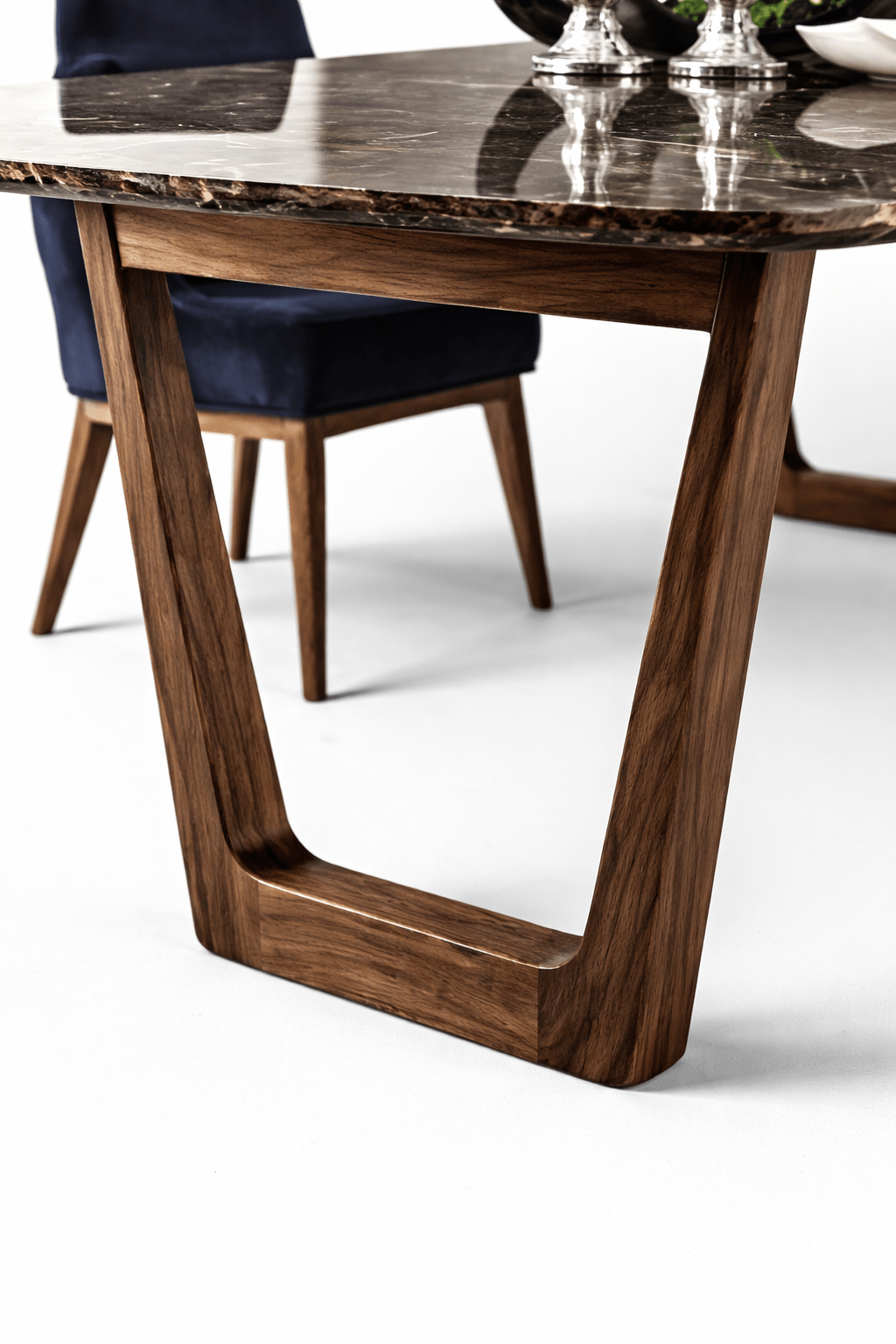
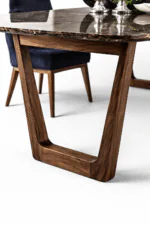
The product name confirms wood and marble, but the available data does not identify the exact wood species, marble type, whether the marble is natural or engineered, or how the two materials are positioned within the table.
Those details should be confirmed separately.
For layout planning, however, they are not the first decision.
Start with the footprint.
Confirm movement.
Check chair positions.
Then evaluate how the final wood and marble specification relates to the surrounding finishes.
This order keeps visual preferences from overriding basic room usability.
“Premium” Is the Product Name, Not a Substitute for Specification
“Premium” appears in the official product name.
It should not be used to imply an unverified wood grade, marble grade, construction method, durability level, or finish standard.
The available source confirms the product name, SKU, and dimensions. It does not provide those additional material or construction specifications.
A clearer product page is more useful than filling those gaps with broad claims.
Product Details
Product: Horizontal Eight Premium Wooden Marble Dining Table
SKU: HE005DT_WM
Size 1: 48″ L × 36″ W × 30″ H
Size 2: 72″ L × 36″ W × 30″ H
The available spreadsheet does not confirm the exact wood species, marble type, whether the marble is natural or engineered, material placement, tabletop thickness, edge profile, finish, base configuration, intended seating capacity, assembly requirements, or joinery.
The Horizontal Eight Premium Wooden Marble Dining Table for the Dining Room is best selected by considering the complete floor plan rather than the table dimensions in isolation. The 48-inch length leaves greater flexibility at the ends of the table, while the 72-inch version creates a longer rectangular axis where the room has enough space to support it.
Please note: Natural wood may show variations in grain, tone, texture, knots, and finish. Marble may show variations in tone, surface pattern, texture, and appearance depending on the final material specification. Lighting, photography, screen settings, material characteristics, and the made-to-order production process may also create slight visual differences. These variations are normal characteristics of made-to-order furniture.





 Accent Chairs
 Coffee Tables
 Sofas
Sofas Sectional Sofas
 Daybed
 Beds
Beds Nightstand
 Dining Tables
 Dining Chairs
 Bar Stools
 Console Tables
 Ottomans
Reviews
Clear filtersThere are no reviews yet.