Wooden Marble Dining Table for Dining Room with Layered Material Character
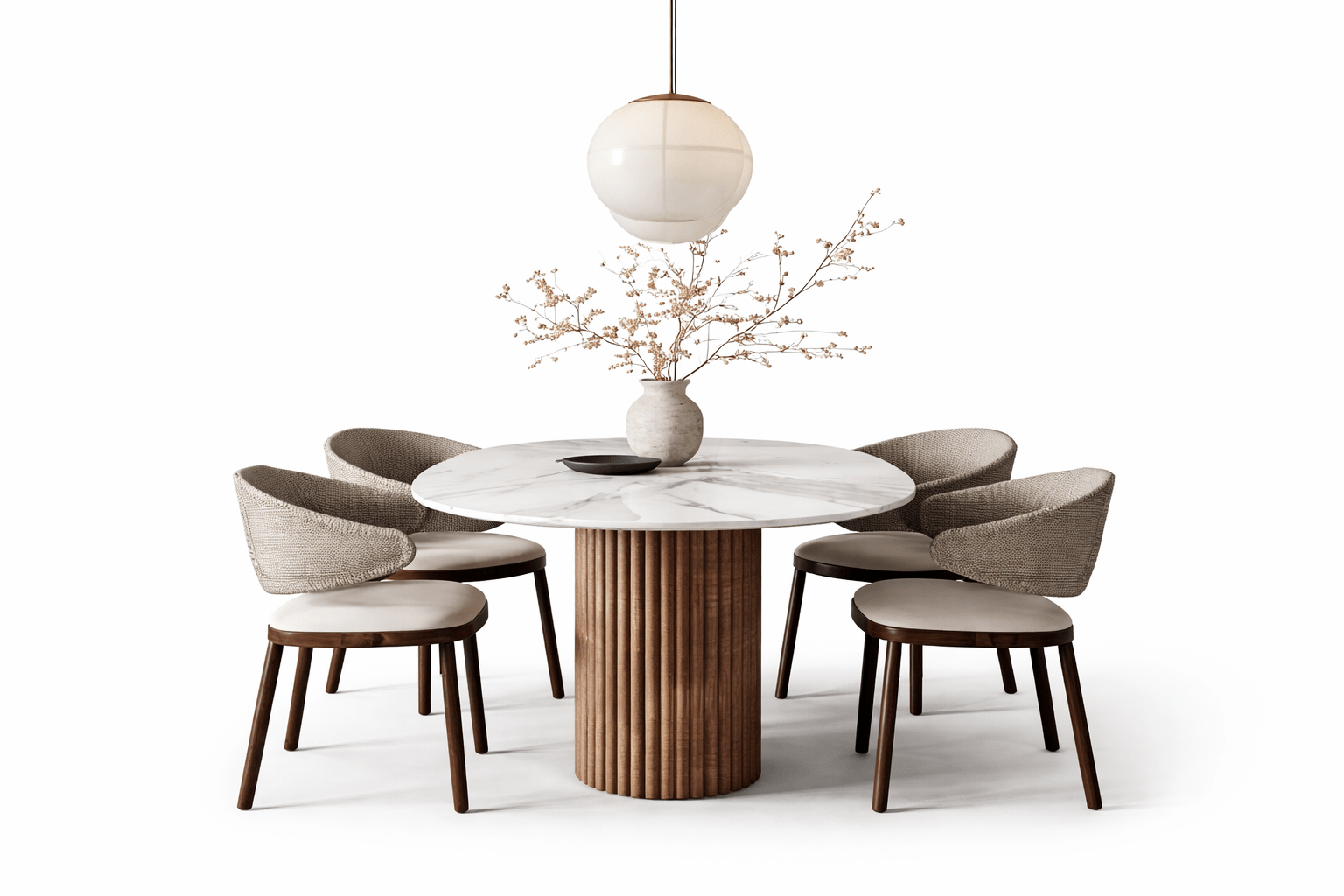
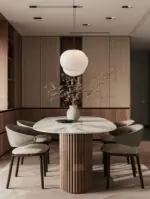
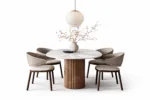
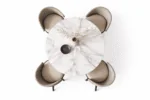
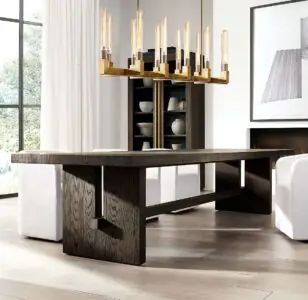
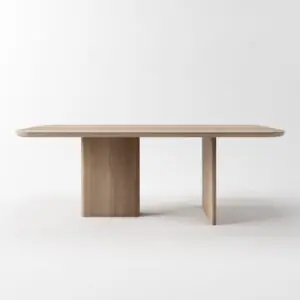
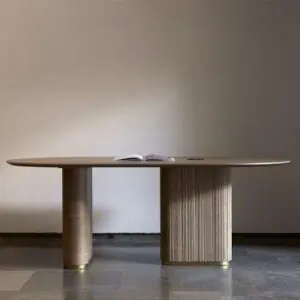
The Horizontal Eight Wooden Marble Dining Table for Dining Room is available in two confirmed formats: 48″ L × 36″ W × 30″ H and 72″ L × 36″ W × 30″ H. Listed in the Wooden Marble category, the table brings two visually distinct material references into one dining-table design.
Wood and marble do not communicate in the same way.
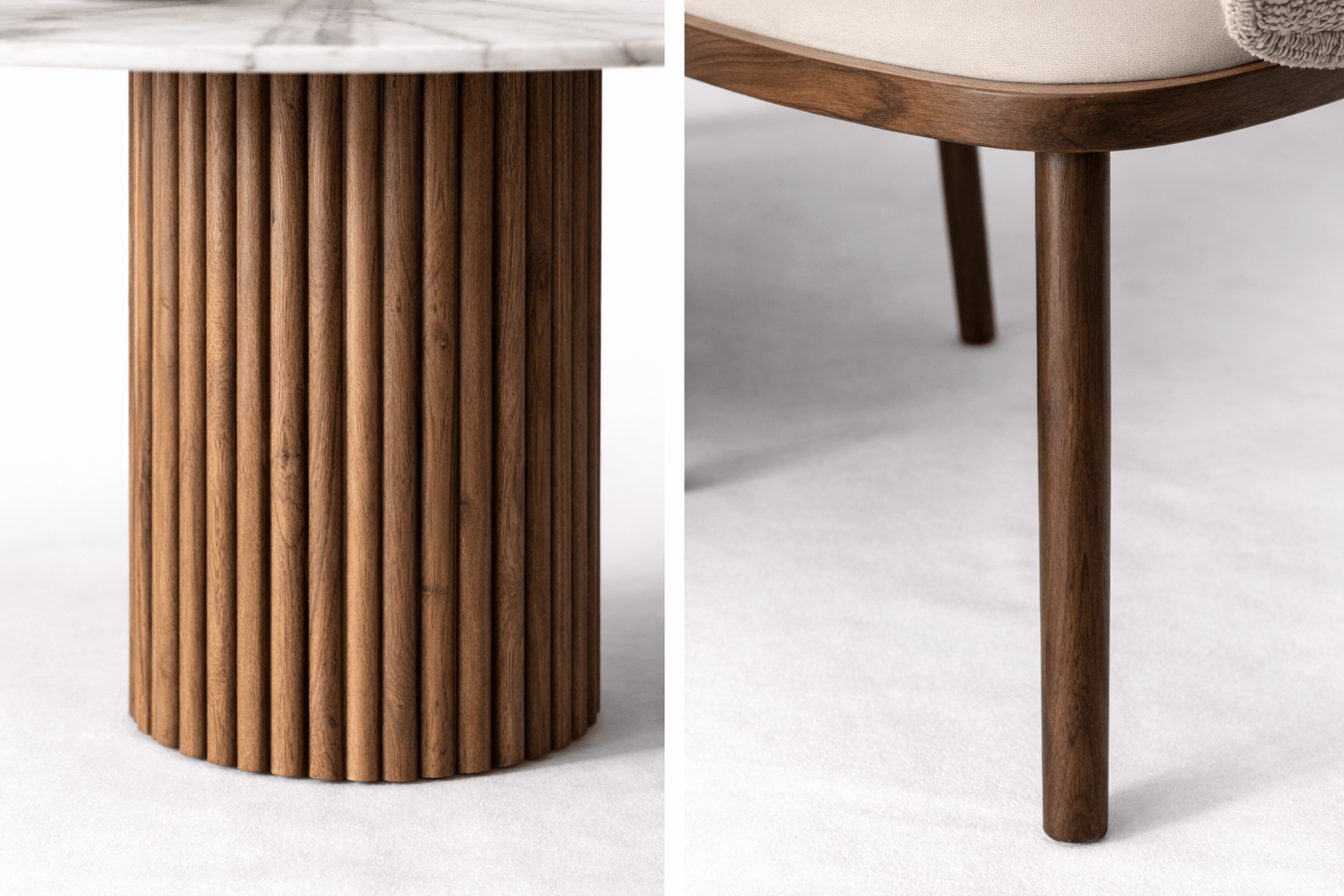
Wood is naturally varied. Grain, tone, texture, and knots can make one section visually different from another.
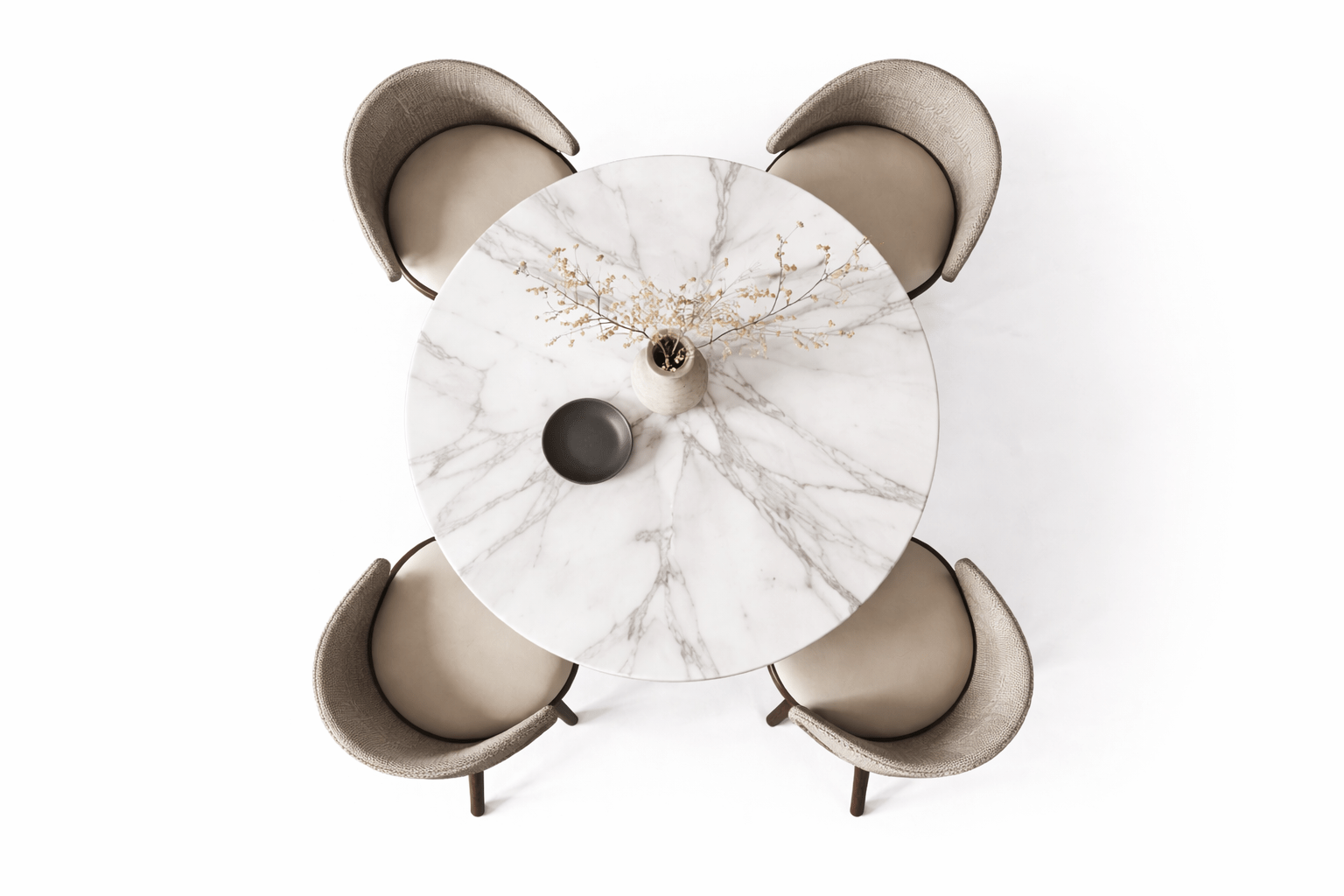
Marble has its own surface movement and tonal variation depending on the final specification.
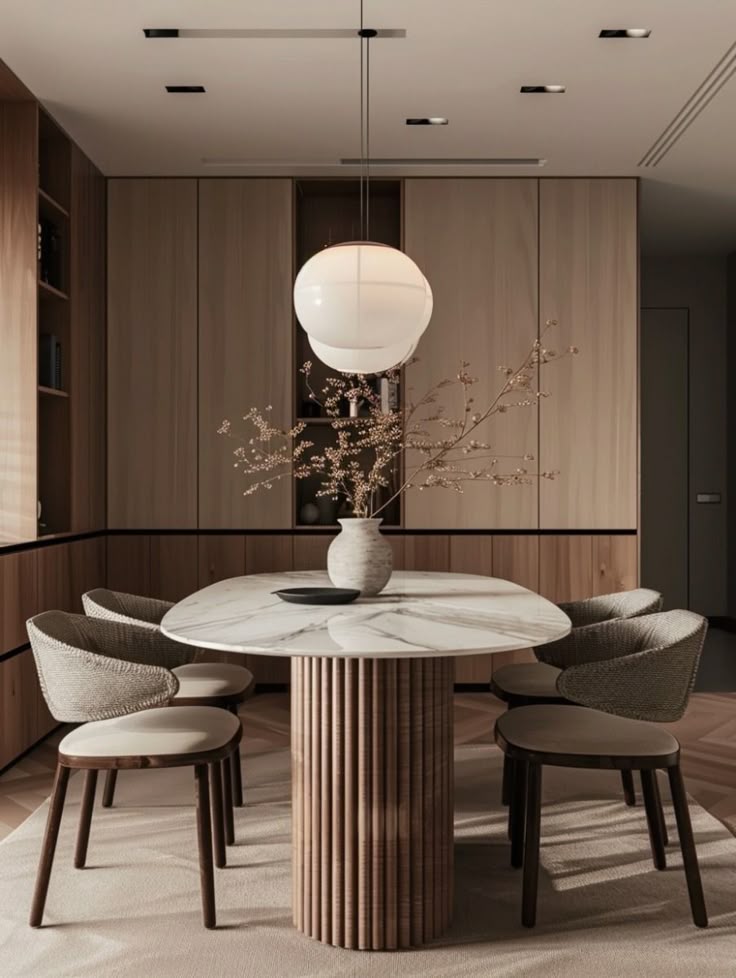
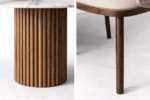
When these two materials appear within the same furniture piece, the table can carry a more layered character than one expressed through a single surface language.
The available source does not confirm which parts of the table are wood or marble, so the exact material placement should be verified separately.
Wooden Marble Dining Table for Dining Room Without Forced Matching
A Wooden Marble Dining Table for Dining Room can be useful in interiors where several material families already coexist.
A dining room may include wooden doors, cabinetry, or flooring while the kitchen or adjoining space introduces stone or marble surfaces.
Instead of forcing the room entirely towards one material, a wooden-marble table can create a point where both visual languages meet.
That does not mean the table should exactly match the wood already present.
It also does not mean every stone surface in the room needs to match the marble element.
A room often feels more considered when materials relate through tone, temperature, or contrast rather than becoming identical.
The final relationship should be decided after the actual wood and marble specifications are confirmed.
Natural Variation Becomes Part of the Design
One reason this product deserves a different story from the Metal Marble collection is the presence of wood.
Wood does not behave like a perfectly uniform manufactured surface.
Its visible characteristics can change naturally from one section to another.
Marble can also carry its own variation depending on the exact material supplied.
That means a Wooden Marble table should not necessarily be judged by whether every grain line, tonal shift, or surface marking looks identical to a product photograph.
Those differences can form part of the visual character of the finished furniture.
This is particularly relevant for made-to-order pieces, where material variation should be expected rather than treated automatically as inconsistency.
The 48-Inch Format Keeps the Material Story Concentrated
The smaller version measures 48″ L × 36″ W × 30″ H.
At four feet long, the table keeps the wood-and-marble combination within a more concentrated furniture footprint.
This can allow the two material references to be read as one compact object rather than across an extended table length.
For a dining room where other furniture, artwork, or architectural details already carry visual interest, the shorter format can keep the dining setting more contained.
Its 36-inch width remains unchanged from the larger version, so the table retains the same basic across-table proportion.
The difference is simply how much length the furniture occupies.
The 72-Inch Format Allows the Material Composition to Extend
The larger table measures 72″ L × 36″ W × 30″ H.
The additional 24 inches give the furniture a longer visual presence.
On a table combining wood and marble, that extra length can make the material relationship more noticeable across the room because the furniture occupies a broader horizontal field.
The 72-inch version can therefore feel more established within a larger dining setting.
It is not only a matter of adding length.
A longer table changes how much wall, flooring, lighting, and surrounding furniture it visually interacts with.
The width and height remain identical to the smaller version, keeping the basic proportion consistent while extending the furniture along one axis.
Use One Material to Connect and the Other to Contrast
A useful way to build the room around the Horizontal Eight Wooden Marble Dining Table for Dining Room is to decide which material should create continuity.
If the dining room already contains visible wood, the wooden element of the table can help connect with that environment while the marble introduces contrast.
If the room already contains stone or marble surfaces, the relationship can work in reverse.
This prevents the interior from becoming too literal.
There is no requirement to repeat both materials equally throughout the room.
One can connect the table to its surroundings while the other gives the furniture its own identity.
Because the exact material colours and finishes are not confirmed in the source data, these decisions should happen only after the final specification is available.
Let the Materials Remain Visible
Mixed-material furniture can lose much of its identity if every surface is heavily covered.
A dining table naturally gathers objects—tableware, centrepieces, serving pieces, and everyday items—but the table itself should still remain visible.
For the 48-inch version, a smaller central arrangement can preserve more open surface.
For the 72-inch version, styling can be distributed along the greater length while still leaving visual breaks between objects.
The purpose is not to keep the table permanently empty.
It is to allow enough of the material composition to remain visible for the furniture to continue contributing to the dining room.
The Same 36-Inch Width Across Both Formats
Both versions remain 36 inches wide.
That fixed width gives the two sizes a consistent across-table proportion.
Customers therefore do not need to choose between a narrow and broad interpretation of the design.
The primary size decision is between 48 inches and 72 inches of length.
This makes the variants easier to compare within an existing room.
If 36 inches works comfortably within the available dining-space depth, the remaining consideration is how much horizontal table length the room can support.
A Consistent 30-Inch Height
Both variants stand 30 inches high.
The table therefore maintains the same vertical relationship with the dining space regardless of the chosen length.
The larger version gains visual presence horizontally rather than vertically.
Dining-chair compatibility, seat height, and under-table clearance should be assessed separately using the exact chair and final table construction, because those specifications are not confirmed in this product row.
Product Details
Product: Horizontal Eight Wooden Marble Dining Table for Dining Room
Category: Wooden Marble
SKU: HE001DT_WM
Size 1: 48″ L × 36″ W × 30″ H
Size 2: 72″ L × 36″ W × 30″ H
The available product information does not confirm the exact wood species, marble type, whether the marble is natural or engineered, material placement, tabletop thickness, edge profile, wood finish, marble finish, base design, intended seating capacity, assembly requirements, or joinery. These specifications should be confirmed separately.
The Horizontal Eight Wooden Marble Dining Table for Dining Room is defined by a layered material identity rather than a single-surface look. Its 48-inch version keeps that relationship more concentrated, while the 72-inch format gives the same 36-inch width and 30-inch height a more extended dining-room presence.
Please note: Natural wood may show variations in grain, tone, texture, knots, and finish. Marble may also show natural or material-specific variations in tone, pattern, veining, and surface character depending on the final specification. Photography, lighting, screen settings, and the made-to-order production process may create further visual differences. These variations are normal characteristics of made-to-order furniture.

 Accent Chairs
 Coffee Tables
 Sofas
Sofas Sectional Sofas
 Daybed
 Beds
Beds Nightstand
 Dining Tables
 Dining Chairs
 Bar Stools
 Console Tables
 Ottomans
Reviews
Clear filtersThere are no reviews yet.