Metal Marble Dining Table for Dining Room with Contrasting Materials
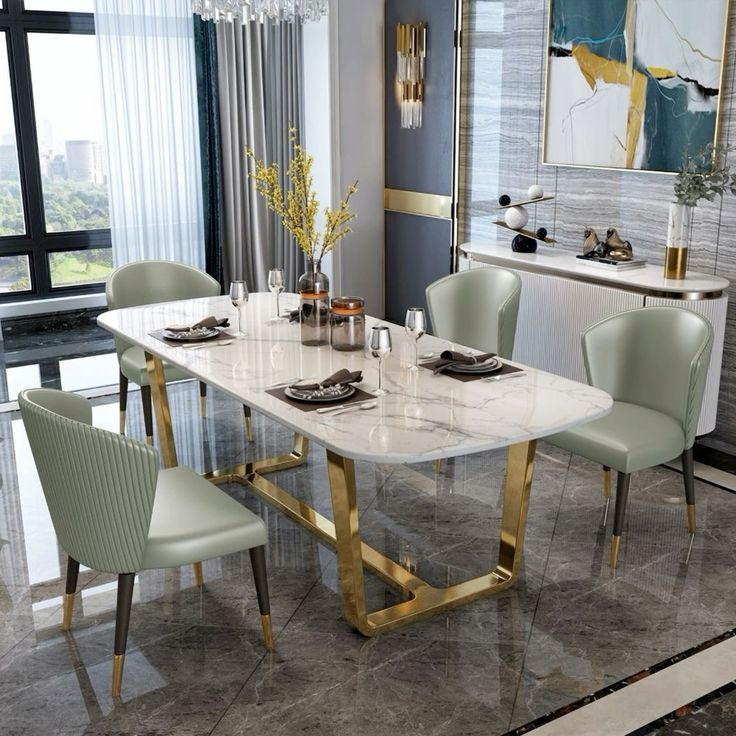
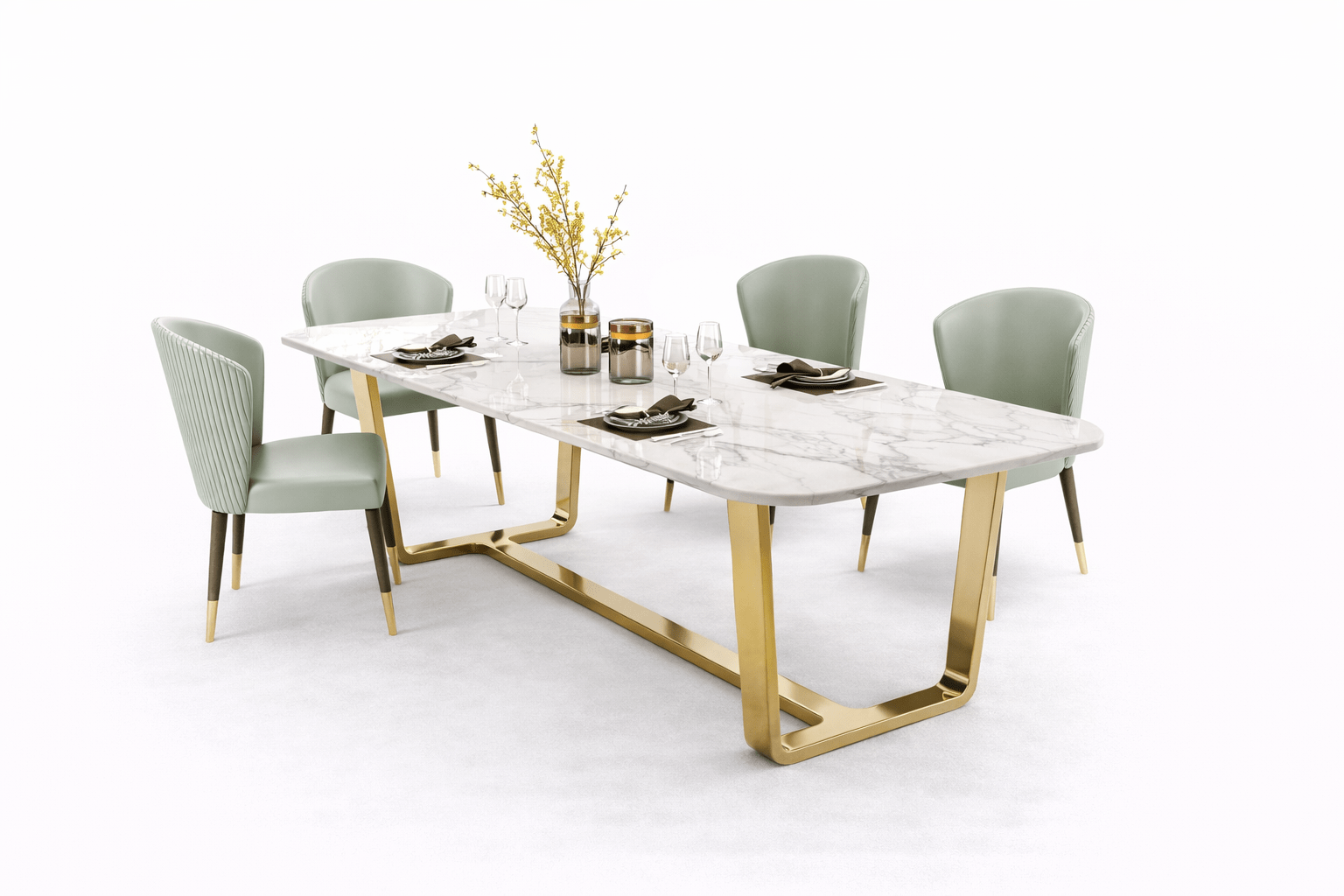
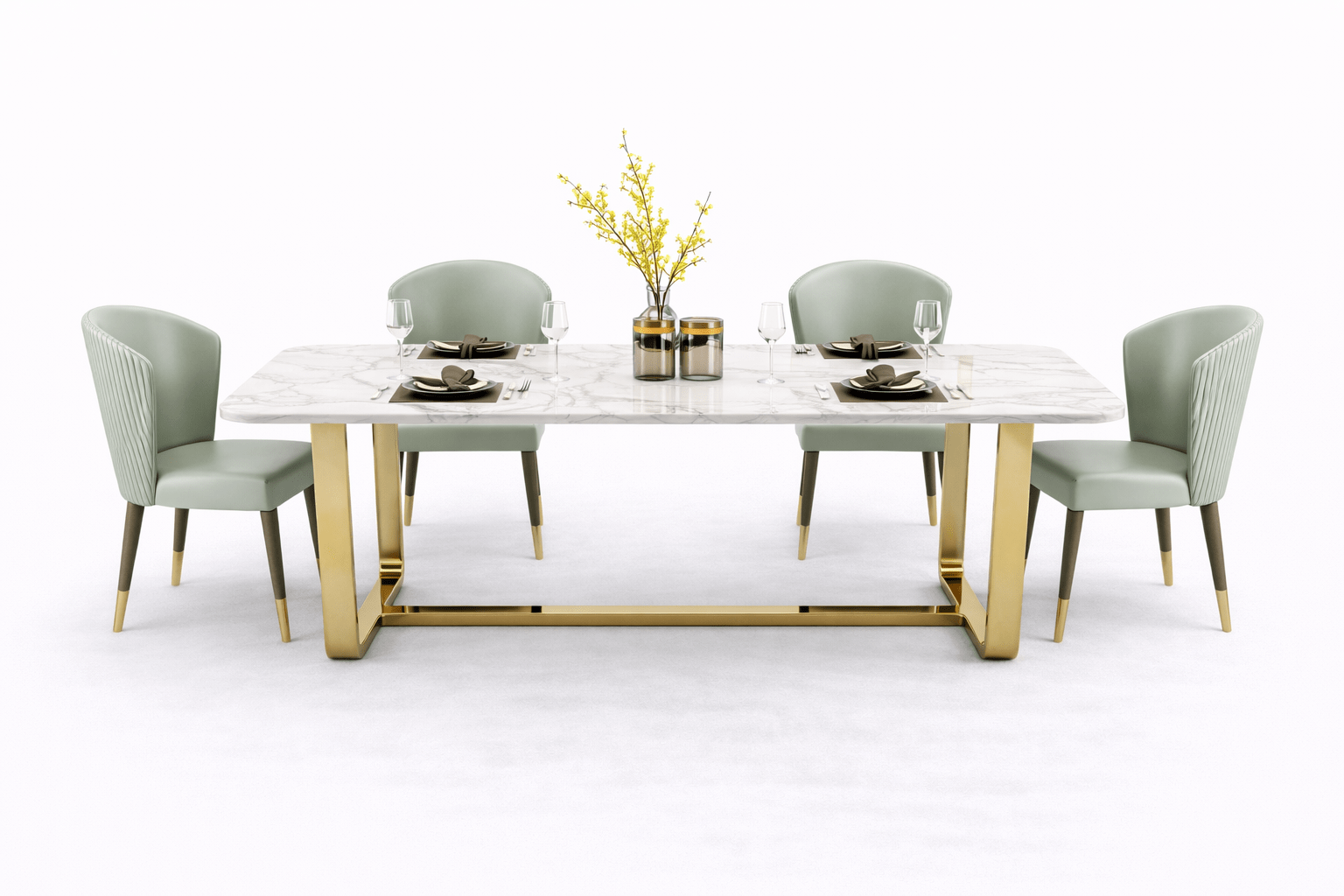
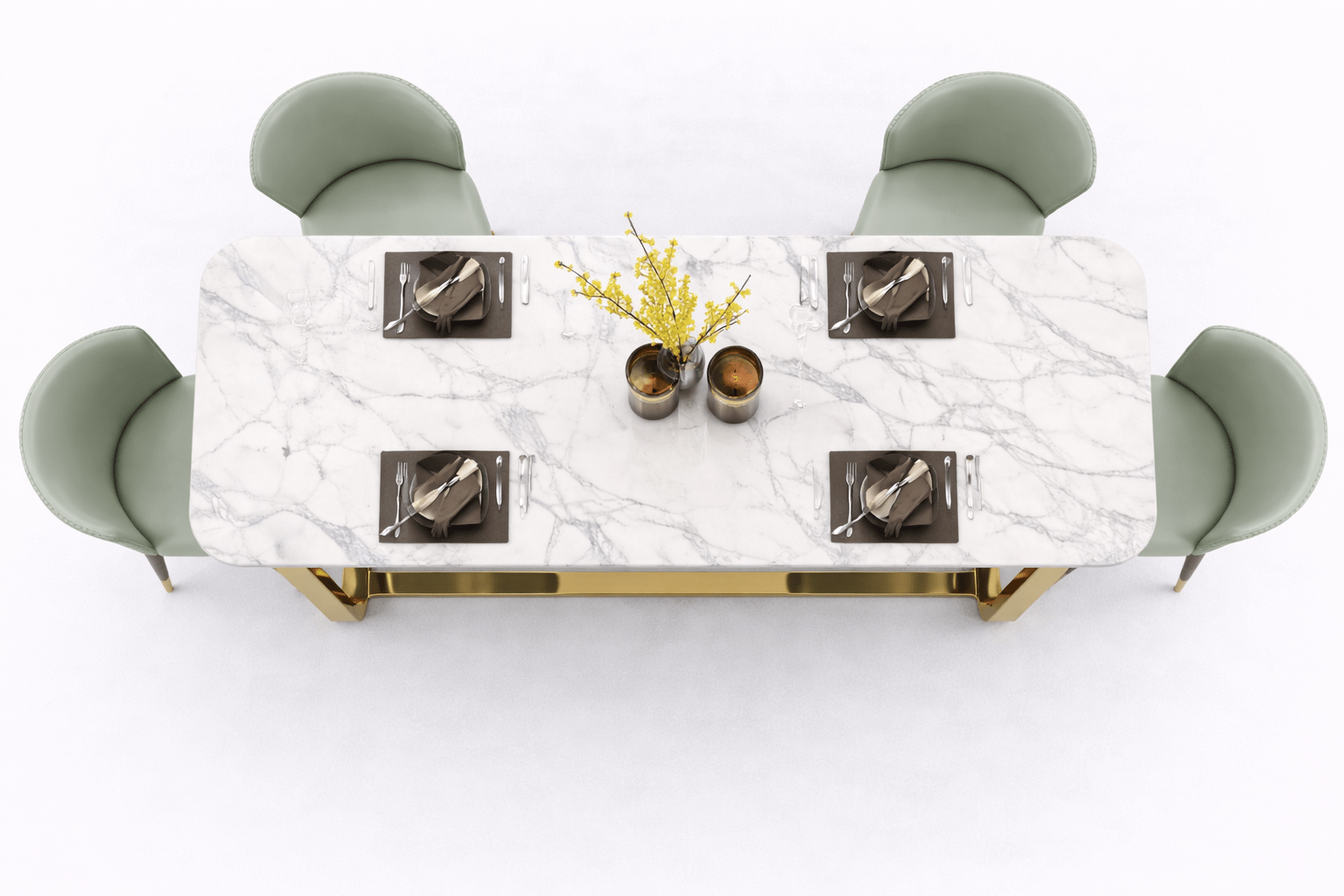
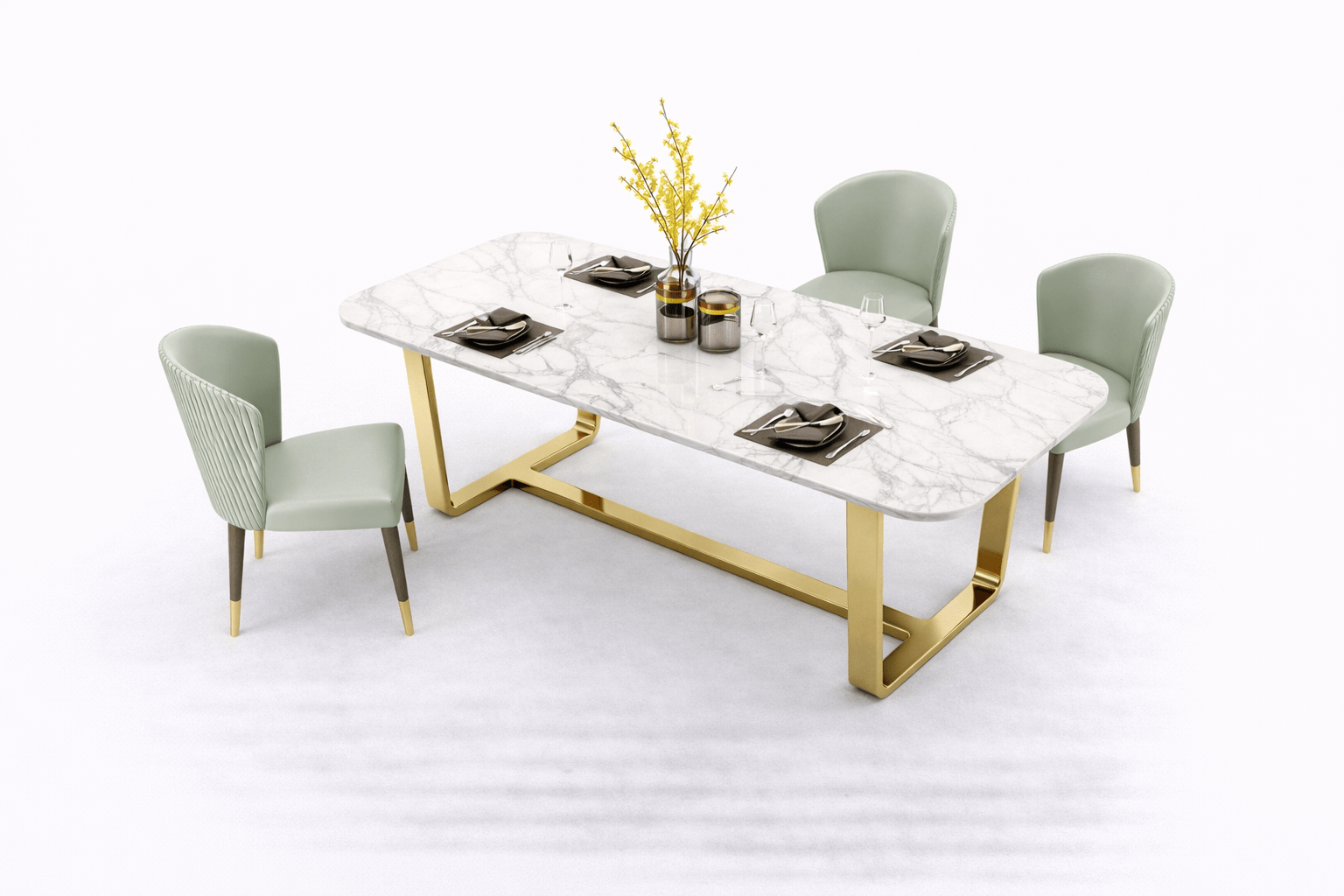
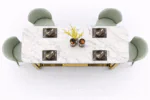
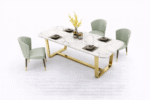
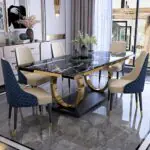
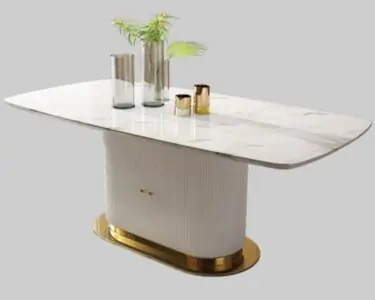
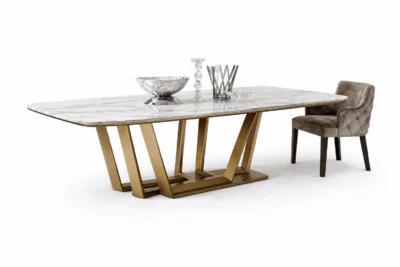
The Horizontal Eight Metal Marble Dining Table for Dining Room brings two visually different material categories into one dining-table composition. The product is listed in the Metal Marble category and is available in two confirmed sizes: 48″ L × 36″ W × 30″ H and 72″ L × 36″ W × 30″ H.
Rather than making the dimensions the entire story, this table is better understood through its material contrast.
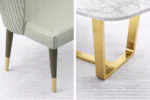
Marble brings the visual character of a solid surface. Metal introduces a different structural and surface language beneath or around it. Used together, those materials can create a dining table that feels more defined through contrast than a table built around one material alone.
The source data does not specify the exact marble type, metal type, colour, thickness, finish, or base configuration. Those details should therefore be confirmed separately.
Why Metal and Marble Work Differently Together
A dining table is experienced as two main visual zones.
The tabletop creates the broad horizontal surface.
The structure beneath it gives the table its stance.
With a Metal Marble Dining Table for Dining Room, those two zones can be visually distinct because the product category combines metal and marble.
This creates opportunities for contrast.
The marble element can carry pattern, tone, or surface variation depending on the final specification, while the metal component can create a more defined structural line.
The important point is not to describe either material with generic claims such as “luxurious” or “premium.” What matters is the relationship between them.
A mixed-material table can look more layered because the eye reads the top and supporting structure as separate but connected parts of the same object.
48-Inch Format: A More Concentrated Material Statement
The smaller version measures 48″ L × 36″ W × 30″ H.
At four feet long, it keeps the metal-and-marble composition relatively concentrated.
This can be useful where the dining table needs enough presence to establish a clear material identity without extending across a large part of the room.
Because the width remains 36 inches, the tabletop still has a substantial rectangular proportion.
The shorter length also means the relationship between the marble surface and metal structure can be read as one compact furniture composition rather than along a long six-foot span.
For homes where the dining area is visually connected to another room, this format may create a stronger focal object without producing an extended furniture line.
72-Inch Format: More Surface, Stronger Horizontal Presence
The larger version measures 72″ L × 36″ W × 30″ H.
The additional 24 inches of length changes the way the material combination reads.
A longer tabletop gives the marble element a more extended horizontal presence. At the same time, the metal structure has to visually support a larger furniture composition.
The result is not simply “the same table with more seats.” It becomes a stronger architectural line within the dining room.
This version can make more sense where the room has enough length for a six-foot table to feel proportionate rather than squeezed between surrounding elements.
The width and height remain unchanged, so the increase in scale happens only along the table length.
Material Contrast Can Guide the Rest of the Room
A mixed-material dining table gives you more than one reference point when selecting surrounding furniture.
The marble component can relate to flooring, counters, wall surfaces, or other stone-like finishes.
The metal element can relate to lighting, hardware, shelving, or smaller details elsewhere in the space.
Those relationships do not need to be exact matches.
In fact, repeating the same finish everywhere can make an interior feel overly coordinated.
A more considered approach is to decide which material should connect with the wider room and which should provide contrast.
For example, the table may relate to existing hard surfaces through the marble while the metal introduces a darker or more defined structural note—or the opposite, depending on the final specification.
Because the exact colours and finishes are not confirmed in the source data, these relationships should be decided after the actual product specification is known.
The Tabletop Can Carry More Visual Weight
Marble, whether natural or engineered, is usually read visually as a continuous slab-like surface.
The exact marble specification for this product is not provided, so its pattern and composition should not be assumed.
What can be said from the Metal Marble category is that the tabletop material identity is likely to matter strongly when the table is viewed from above and across the room.
That makes tabletop styling worth keeping controlled.
If the surface itself has visible pattern or tonal movement in the final specification, covering most of it with large decorative objects can reduce the role that material plays in the interior.
A dining table does not always need heavy styling. Sometimes the material surface is already doing enough.
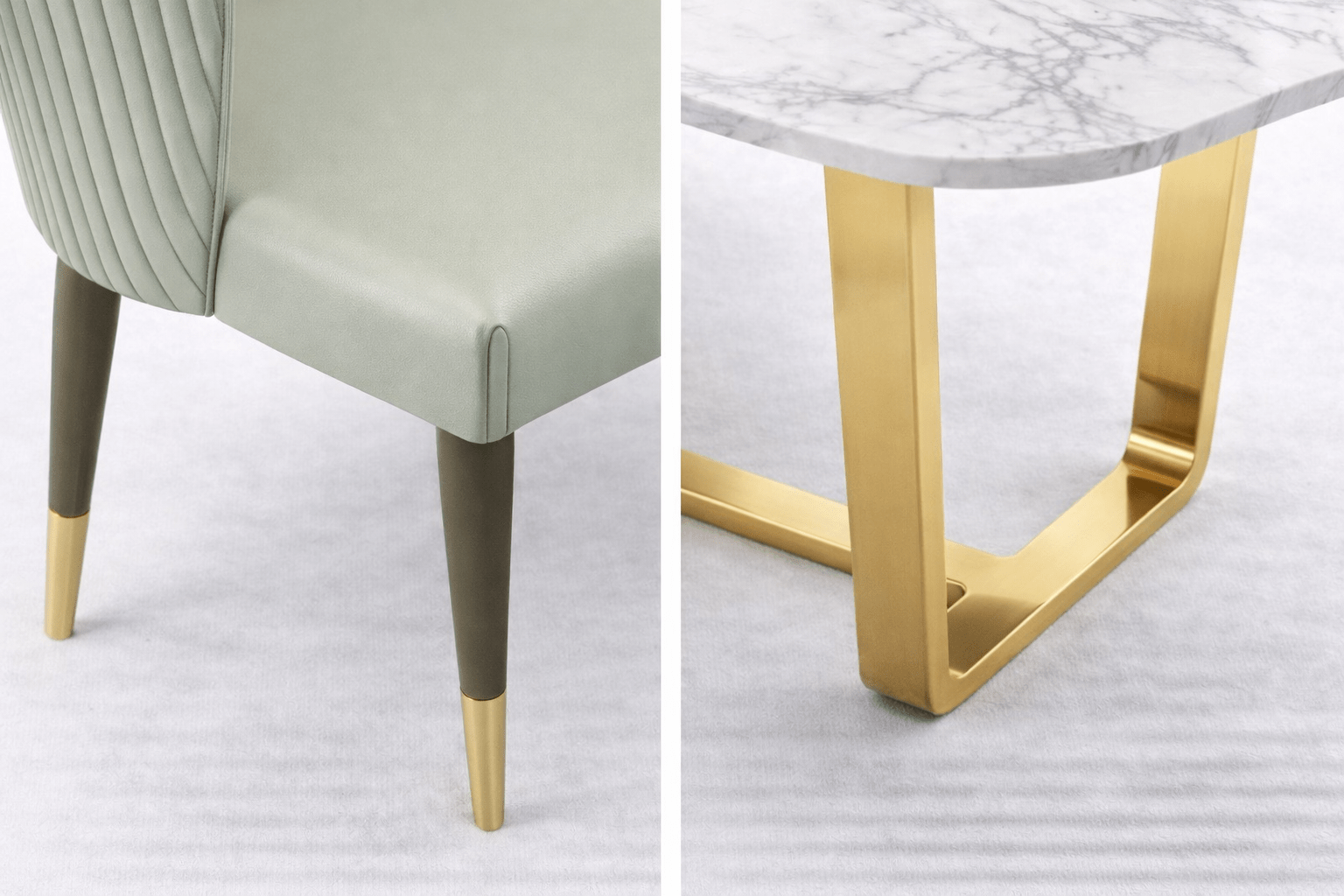
Metal Gives the Lower Half a Different Visual Language
The metal component introduces a different visual character beneath the tabletop.
Again, the spreadsheet does not state whether the metal is steel, iron, another alloy, painted, powder-coated, polished, matte, or otherwise finished.
Those claims should not be invented.
But the presence of metal as a confirmed category element means the lower structure can be considered separately from the marble surface.
This creates a useful design contrast: a broad surface above and a structurally different material below.
When dining chairs are placed around the table, parts of that metal structure may remain visible between the seats. Chair design will therefore influence how much of the mixed-material identity can actually be seen from across the room.
Choosing Between the Two Sizes
The decision between 48 inches and 72 inches should begin with both room scale and how much visual presence you want the table to have.
The 48-inch version creates a tighter furniture composition.
The 72-inch version establishes a longer horizontal feature.
Both remain 36 inches wide and 30 inches high.
That means if the table works comfortably across the width of your dining area, the main question becomes how much length the room can support.
Look at the position of the dining light.
Consider the wall or opening behind the table.
Check how the table length relates to nearby sideboards, consoles, doors, or transitions into other spaces.
The larger table should feel proportionate to the room, not simply fill available floor area.
Product Details
Product: Horizontal Eight Metal Marble Dining Table for Dining Room
Category: Metal Marble
SKU: HE001DT_MM
Size 1: 48″ L × 36″ W × 30″ H
Size 2: 72″ L × 36″ W × 30″ H
The available product data does not confirm the exact marble type, whether the marble is natural or engineered, metal type, tabletop thickness, metal finish, edge profile, base configuration, seating capacity, assembly requirements, or joinery. These specifications should be confirmed separately.
Care should follow the instructions supplied for the final marble and metal specifications. Different stone surfaces and metal finishes require different cleaning methods, so product-specific care guidance should take priority over generic advice.
The Horizontal Eight Metal Marble Dining Table for Dining Room is defined by the relationship between two different material languages and two available table lengths. The 48-inch format keeps that composition compact, while the 72-inch format gives the same 36-inch width and 30-inch height a stronger horizontal presence.
Please note: Colour, tone, surface pattern, texture, and finish may vary slightly from the images shown due to lighting conditions, photography, screen settings, material characteristics, and the made-to-order production process. These subtle differences are normal characteristics of made-to-order furniture.





 Accent Chairs
 Coffee Tables
 Sofas
Sofas Sectional Sofas
 Daybed
 Beds
Beds Nightstand
 Dining Tables
 Dining Chairs
 Bar Stools
 Console Tables
 Ottomans
Reviews
Clear filtersThere are no reviews yet.